

- April 28, 2026
- Dr. Vikrant Kale
- 0 Comments
- Latest Blogs
Diet for GERD/Acid Reflux: What to Eat & Avoid?
That familiar burning sensation in your chest after a spicy meal, a cup of strong chai, or a late-night snack — almost every Indian has felt it at some point. But when this burning becomes a regular part of your life, it is no longer just acidity or heartburn. It could very well be Gastroesophageal Reflux Disease (GERD) — a chronic digestive condition that affects millions of Indians every day.
According to estimates, nearly 30% of Indians experience acid reflux at least once a month, and over 10% suffer from GERD on a regular basis. And yet, most people simply reach for an antacid and carry on — not realising that their diet for acid reflux disease and daily lifestyle choices are at the root of the problem.
As one of the best gastroenterologists in Pune, Dr. Vikrant Kale — Director & Head of the Department of Medical Gastroenterology at Kaizen Gastro Care Clinic, PCMC, Pune — sees patients with GERD every single day. With experience of 5,000+ gastroscopies, 3,000+ colonoscopies, and 1,000+ ERCP procedures, Dr. Kale is highly skilled in both advanced GERD treatment and GERD surgery in Pune. One of the first things he emphasises to every patient is this: what you eat matters enormously.
In this detailed guide, we will walk you through the best GERD diet plan tailored specifically to the Indian lifestyle — what to eat, what to avoid, an easy 7-day Indian meal plan, and the lifestyle habits that can make a real difference. Whether you are managing mild acid reflux or a more severe GERD condition, this guide will help you take control through food.
What Is GERD? Understanding It from the Root
GERD (Gastroesophageal Reflux Disease) happens when stomach acid repeatedly flows back — or ‘refluxes’ — into the oesophagus (food pipe). This backflow irritates and inflames the lining of the oesophagus, causing a range of uncomfortable and sometimes serious symptoms.
How Does It Happen?
At the junction of your oesophagus and stomach sits a muscular valve called the Lower Esophageal Sphincter (LES). This valve should open to allow food to pass into the stomach and then close tightly. In people with GERD, this valve weakens or relaxes incorrectly — allowing acid to escape upward.
Common GERD Symptoms:
- Heartburn — a burning pain in the chest or throat, especially after eating
- Regurgitation — a sour or bitter-tasting acid backing up into the mouth or throat
- Difficulty swallowing (dysphagia)
- Chest pain or discomfort
- Bloating, burping, and nausea
- Chronic dry cough or hoarseness of voice
- A feeling of a lump in the throat
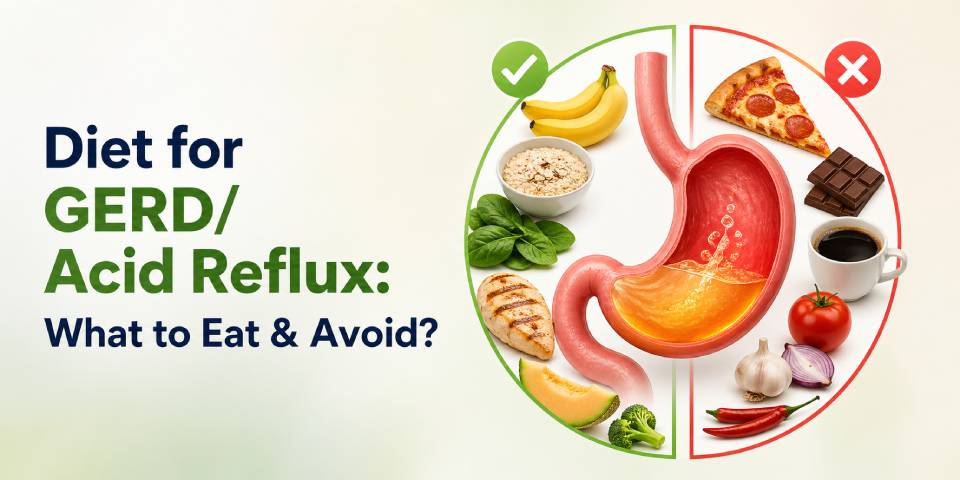
GERD Diet Chart — Foods to Eat & Foods to Avoid:
One of the most practical tools in managing gastroesophageal reflux disease is a proper GERD diet chart. Here is a comprehensive guide for Indian patients:
| Food Category | GERD-Friendly (Eat) | Avoid in GERD |
|---|---|---|
| Grains | Oatmeal, brown rice, white rice, dalia, broken wheat, quinoa | Maida (refined flour), deep-fried parathas, puri |
| Vegetables | Lauki, turai, parwal, tinda, karela, bhindi, leafy greens | Tomatoes, onion (raw), capsicum, chillies |
| Fruits | Banana, pear, melon, apple, custard apple | Citrus (orange, lemon, mosambi), pineapple, grapes |
| Pulses/Dal | Moong dal, masoor dal, chickpeas (mild & well-cooked) | Rajma/chole with heavy masala, urad dal (heavy) |
| Dairy | Low-fat curd, buttermilk (plain), skim milk | Full-fat paneer, heavy cream, butter, ghee in excess |
| Proteins | Skinless chicken, fish (grilled/steamed), boiled egg white | Fried chicken, red meat, egg yolk (in excess) |
| Drinks | Herbal tea, coconut water, plain lassi, chamomile tea | Chai, coffee, cold drinks, alcohol, packaged juices |
| Snacks | Dry fruits (almonds, raisins), plain crackers, poha | Samosa, pakora, chips, vada, farsan |
| Condiments | Jeera, coriander, turmeric, fennel (saunf) | Red chilli powder, garam masala, pickles, tamarind |
Gastroesophageal Reflux Disease Foods to Eat — Explained in Detail
1. Whole Grains & Cereals:
Gerd foods to eat start with fibre-rich whole grains. Oatmeal is a top choice — it absorbs excess stomach acid and keeps you feeling full without triggering reflux. Broken wheat (dalia), brown rice, and quinoa are excellent alternatives to refined grains. These are staples in an Indian kitchen and can easily form the base of your meals.
- Replace maida-based breads, puri, and bhatura with soft roti, steamed rice, or dalia
- Poha (without excess oil and no tomato) is a good GERD-friendly breakfast
- Avoid deep-fried parathas; choose plain tawa roti with minimal oil
2. Vegetables — Especially Indian Gourds:
Indian gourds — lauki (bottle gourd), turai (ridge gourd), parwal, tinda, karela (bitter gourd), and bhindi (okra) — are among the best vegetables for GERD patients. They are alkaline, easy to digest, and gentle on the stomach lining.
- Leafy greens like spinach and methi help neutralise stomach acid
- Steam or stir-fry vegetables with minimal oil and no red chilli
- Avoid tomato-based gravies, capsicum, and raw onions, which are common acid reflux triggers
3. GERD-Friendly Fruits:
Food for GERD disease must include non-citrus fruits. Bananas are excellent — they are naturally alkaline and coat the oesophageal lining. Pears, melons, apples, and custard apple are all well-tolerated. A useful tip from nutrition experts: eat a fruit before your main meal as an appetite suppressant — it is low in fat and high in fibre.
- Avoid citrus fruits like orange, mosambi, lemon, and pineapple
- Skip packaged fruit juices — they are acidic and high in sugar
- Eat whole fruits rather than fruit smoothies with dairy
4. Proteins — Lean and Light:
Protein is essential, but the type and cooking method matter greatly for GERD patients. Skinless chicken, fish (grilled or steamed), and boiled egg whites are ideal. For vegetarians, moong dal and masoor dal (cooked lightly, without heavy tempering) are the best choices.
- Avoid red meat, fried chicken, and heavy mutton curries
- Cook dal with minimal tadka — use jeera and coriander instead of red chilli and garam masala
- Chickpeas and kidney beans are okay only when well-cooked and mildly spiced
5. Dairy — Probiotics Are Your Friend:
Fermented dairy products are genuinely helpful for GERD. Low-fat curd (dahi), plain buttermilk (chaas without tadka), and fermented foods like idli, dosa, and dhokla promote healthy gut bacteria (probiotics) which improve digestion and reduce acid reflux episodes.
- Drink plain chaas (not masala chaas) with lunch
- Avoid full-fat paneer, heavy cream, butter in excess, and cheese
- If lactose intolerant, opt for probiotic supplements after consulting your doctor
6. Helpful Indian Kitchen Remedies:
- Saunf (fennel seeds) — chew a teaspoon after meals; a natural digestive
- Amla (Indian gooseberry) powder — anti-inflammatory and alkaline
- Ginger tea (mild, without milk) — soothes the stomach lining
- Jeera water — boil cumin seeds in water and sip warm
- Herbal teas like chamomile or licorice-fennel blend — replace your morning chai
Acid Reflux Foods to Avoid — The Indian GERD Trigger List:
Understanding foods to avoid in GERD is just as important as knowing what to eat. Here is a detailed breakdown for Indian patients following a diet acid reflux management plan:
Spicy and Fried Foods:
This is perhaps the biggest challenge in the Indian context. Spicy masalas directly irritate the oesophagus and also relax the LES, allowing acid to flow back up. Fried foods are high in fat, which delays stomach emptying and increases reflux risk.
- Avoid: Samosa, pakora, vada pav, kachori, bhajiya, puri bhaji
- Avoid: Heavy gravies with excess red chilli, garam masala, and tamarind
- Replace: Deep frying with steaming, baking, or light sautéing
Acidic Foods:
Highly acidic foods increase acid production in the stomach. In Indian cooking, tomatoes are used almost universally — and this is a significant trigger for most GERD patients.
- Avoid: Tomatoes, tomato puree, tomato-based gravies (makhani, arrabbiata)
- Avoid: Citrus fruits — orange, lemon, mosambi, pineapple, grapefruit
- Avoid: Tamarind (imli), amchur (dry mango powder) in large amounts
High-Fat Foods:
Fatty foods are a well-known GERD trigger. They relax the LES and slow down digestion, keeping food in the stomach longer and raising pressure on the LES.
- Avoid: Biryani with heavy ghee, deep-fried snacks, full-fat cheese and cream
- Use ghee in very small amounts only — do not drench your dal or rice in ghee
- Replace heavy oil with a light drizzle of olive oil or use cooking spray
Trigger Beverages:
- Chai and coffee: Caffeine relaxes the LES — limit to 1 cup per day or switch to herbal tea
- Cold drinks and sodas: Carbonation creates pressure in the stomach, pushing acid upward
- Alcohol: Directly irritates the oesophagus and relaxes the LES
- Packaged fruit juices: High acidity and sugar content worsen symptoms
Other Common Triggers:
- Chocolate — relaxes the LES and is high in fat and caffeine
- Mint (pudina) in large quantities — relaxes the LES (small amounts may be okay)
- Raw onions — a well-documented reflux trigger
- Pickles (achar) and chutneys made with excess spice and tamarind
What Are the GERD Complications If Left Untreated?
GERD complications are serious and should not be ignored. Persistent acid reflux, when left untreated, can lead to:
- Esophagitis — inflammation and ulcers in the oesophagus
- Barrett’s Oesophagus — a pre-cancerous change in the oesophagus lining
- Oesophageal stricture — narrowing that makes swallowing very difficult
- Increased risk of oesophageal cancer
Dr. Vikrant Kale always advises patients: do not dismiss frequent heartburn as ‘normal acidity.’ If symptoms occur more than twice a week, please see a gastroenterologist without delay.
Why Is GERD So Common in Indians? The Diet Connection:
The Indian diet is rich, flavourful, and culturally vibrant — but several of our traditional and modern eating habits can put significant stress on the digestive system, especially the LES.
Indian Diet Habits That Trigger Acid Reflux:
- Heavy, spicy curries with excess red chilli, garam masala, and tamarind
- Fried snacks like samosa, pakora, vada pav, and bhajiyas
- Multiple cups of strong chai or coffee throughout the day
- Very late dinner timings — eating at 9 or 10 PM and going to bed shortly after
- Large portion sizes at a single meal instead of frequent small meals
- Carbonated cold drinks and packaged juices
- Irregular meal timings and skipping breakfast
However, it is important to note that the Indian diet itself is not the villain. Many traditional Indian foods are actually excellent for digestion. The real problem lies in portion overload, excessive spice, unhealthy cooking methods, and poor meal timing.
When planned mindfully, an Indian diet can be highly effective in managing GERD — and that is exactly what this blog will show you.
7-Day GERD Diet Plan — Indian Meal Plan:
Here is a sample gerd diet plan designed specifically around Indian foods and meal timings. This diet plan for acid reflux disease follows the principle of small, frequent, low-fat, low-spice, and high-fibre meals. Adjust quantities and specific foods based on your personal tolerance and on advice from your nutritionist for GERD or doctor.
| Day | Early Morning | Breakfast | Mid-Morning | Lunch | Evening Snack | Dinner |
|---|---|---|---|---|---|---|
| Day 1 | Warm water + saunf | Oatmeal with banana | Small banana | Plain rice + lauki sabzi + low-fat curd | Herbal tea + dry fruits | Moong dal khichdi (mild) |
| Day 2 | Warm water + amla powder | Broken wheat upma (no tomato) | Pear | Soft roti + turai sabzi + dal | Coconut water | Soft rice + bottle gourd soup |
| Day 3 | Warm water + fennel tea | Idli (2-3) + coconut chutney | Melon slices | Plain rice + ridge gourd curry | Low-fat buttermilk (no spice) | Dalia khichdi + steamed veggies |
| Day 4 | Warm water + amla powder | Moong dal chilla (no chilli) | Apple | Roti + parwal sabzi + curd | Herbal chamomile tea | Soft roti + moong dal (light) |
| Day 5 | Warm water + saunf | Poha (no onion/tomato) | Small banana | Plain rice + ladies finger sabzi | Dry fruits (almonds, raisins) | Khichdi + steamed spinach |
| Day 6 | Warm water + ginger-honey tea | Soft dosa + coconut chutney | Pear or melon | Roti + baingan bharta (no masala) | Low-fat curd | Rice + lauki dal |
| Day 7 | Warm water + fennel tea | Oatmeal with banana and honey | Apple slices | Khichdi + cucumber raita | Herbal tea + dry fruits | Soft roti + bottle gourd sabzi |
Lifestyle Changes That Support Your GERD Diet:
Dr. Vikrant Kale, recognised as one of the best gastros in Pune, always tells his patients: diet alone is not enough. Lifestyle changes are equally important in managing gastroesophageal reflux disease. Here is what the evidence recommends:
- Eat Smaller, More Frequent Meals: Large meals increase stomach pressure and push acid up through the LES. Instead of 3 large meals, aim for 5–6 smaller meals spread throughout the day. Never overeat — stop eating when you are 80% full.
- Do Not Lie Down Immediately After Eating: Stay upright for at least 45–60 minutes after every meal. This prevents backflow of stomach contents. Avoid bending forward or exercising vigorously right after eating.
- Dinner Timing Is Critical: Finish your dinner at least 2–3 hours before sleeping. Late dinners are one of the top reasons Indians suffer from GERD — our habit of eating at 9 or 10 PM and sleeping by 11 PM leaves no time for digestion.
- Elevate Your Head While Sleeping: Raise the head end of your bed by 6–8 inches using a wedge pillow or by placing books under the bed frame. This uses gravity to keep stomach acid in the stomach during sleep.
- Weight Management: Excess abdominal weight puts pressure on the stomach and LES. Losing even 5–10% of your body weight can reduce GERD symptoms significantly. Follow your GERD diet plan consistently for gradual, sustainable weight loss.
- Quit Smoking: Nicotine directly weakens the LES muscle. Quitting smoking is one of the most impactful steps a GERD patient can take.
- Manage Stress: Stress worsens acid production and gut motility. Incorporate yoga, pranayama, meditation, or simple deep-breathing exercises into your daily routine. Even a 15-minute walk after meals can help improve digestion.
- Wear Loose Clothing: Tight waistbands, belts, and fitted clothing after meals increase abdominal pressure. Choose comfortable, loose-fitting clothes, especially after eating.
When Diet Is Not Enough — GERD Treatment Medicine & Medical Help?
Diet and lifestyle changes are the foundation of GERD management. However, for many patients, especially those with moderate to severe gastroesophageal reflux disease, medical treatment is also necessary alongside dietary changes.
GERD Treatment Medicines:
Your gastroenterologist may recommend one or more of the following categories of medicine for GERD treatment:
- Proton Pump Inhibitors (PPIs): Omeprazole, Pantoprazole, Rabeprazole — reduce stomach acid production
- H2 Receptor Blockers: Famotidine, Ranitidine — reduce acid secretion
- Antacids: For immediate but short-term relief of heartburn acidity
- Prokinetics: Help the stomach empty faster, reducing reflux
Should You See a Nutritionist or Acid Reflux Dietitian?
Absolutely yes. A qualified acid reflux dietitian or nutritionist for GERD can make a tremendous difference in your recovery. General dietary guidelines are helpful — but every individual’s triggers are different. One person may tolerate a small amount of chai without any issue, while for another it is an instant trigger.
An experienced GERD dietitian will:
- Create a personalised Indian GERD diet chart based on your specific triggers and nutritional needs
- Help you identify hidden triggers in your current diet through a food diary
- Ensure you are not missing key nutrients while avoiding trigger foods
- Design an Indian meal plan that is both GERD-friendly and culturally appropriate
- Work alongside your gastroenterologist for a holistic treatment approach
Dt. Bhushan Khedkar and Dt. Shweta Kale is renowned as the best gut Dietitian & Nutritionist in Pune which is available at Kaizen Gastro Care Pune offers dietary counselling.
Conclusion:
GERD and acid reflux are very manageable conditions — especially when you take a proactive, informed approach to your diet and lifestyle. The gastroesophageal reflux disease diet does not have to be boring or culturally alien. With the right knowledge, you can enjoy deeply satisfying Indian meals while keeping your reflux completely under control.
Dr. Vikrant Kale and his team at Kaizen Gastro Care Clinic, PCMC, Pune, offer comprehensive evaluation and personalised GERD treatment plans — from dietary counselling and medication to advanced endoscopic and surgical interventions. If you have been struggling with heartburn acidity or persistent acid reflux, do not delay — early diagnosis and treatment can prevent serious GERD complications.
Take the first step today. Book a consultation, start your GERD diet plan, and reclaim a life free from constant heartburn, acidity, and discomfort.
FAQ's — GERD Diet & Indian Lifestyle:
Spicy food is a very common trigger, but tolerance varies. Some patients can handle a small amount of mild spice, while others cannot. The best approach is to start a food diary, identify your personal triggers, and reduce spice gradually. You do not have to eat completely bland food forever — but heavy masalas and excess chilli should be avoided.
Not necessarily completely off-limits, but it should be significantly reduced. Limit yourself to one small cup of weak, milky chai per day — ideally not on an empty stomach. Better still, switch to herbal teas like chamomile, fennel, or ginger tea. Avoid strong black chai on an empty stomach completely.
Many patients notice improvement within 1–2 weeks of making consistent dietary and lifestyle changes. However, chronic GERD that has been present for months or years may require longer adherence plus medical treatment. Stay consistent and track your symptoms.
Low-fat plain curd (dahi) is generally well-tolerated and beneficial due to its probiotic content. However, full-fat curd in large amounts or flavoured yoghurts with added sugar can be problematic. Stick to plain, low-fat dahi in moderate amounts.
Mild GERD can often be managed very well through diet and lifestyle changes alone. However, moderate to severe GERD typically requires a combination of dietary modifications, lifestyle changes, and medical treatment. In certain cases, surgical options like laparoscopic fundoplication may be needed. This is best evaluated by an experienced gastroenterologist.
Ghee in small amounts is generally tolerable for most GERD patients. The problem arises when ghee is consumed in large quantities — as is common in Indian cooking where dal, rice, and roti are often generously drizzled with ghee. Keep ghee to half a teaspoon per meal.
