
- October 1, 2026
- Dr. Vikrant Kale
- 0 Comments
- Liver Disease
NAFLD vs NASH: When Does Fatty Liver Become Dangerous?
Fatty liver is very common today. Almost every third adult has some amount of fat in the liver. Many people have it without knowing. They feel completely fine. No pain, no discomfort, nothing unusual. Most cases stay mild for years. But in some people, this silent fat buildup slowly turns into a more serious condition called NASH. Understanding the difference between the two stages can protect your liver for many years to come. In this blog, Dr. Vikrant Kale, a leading Liver Specialist in Pune, explains NAFLD progression, warning signs, and treatment options in simple, easy-to-understand words.
What Is NAFLD?
NAFLD stands for Non-Alcoholic Fatty Liver Disease. It simply means fat builds up in the liver cells, but not because of alcohol. This condition is called “non-alcoholic” because it happens even in people who don’t drink at all. It often has no symptoms in the early stage. Many people discover it by chance, during a routine ultrasound done for some other reason. In recent years, doctors have started using a new name for this condition. NAFLD is now also called MASLD, which stands for Metabolic Dysfunction-Associated Steatotic Liver Disease. MASLD and MASH are simply updated, more accurate names replacing the older terms NAFLD and NASH. The disease itself remains the same; only the medical terminology has changed.
What Is NASH?
NASH means Non-Alcoholic Steatohepatitis. This is a more advanced and harmful stage of fatty liver disease. Here, the fat in the liver causes actual inflammation and injury to liver cells. NASH is not just simple fat storage anymore. It is active liver damage happening quietly, day after day. Left untreated, NASH symptoms can slowly worsen over months and years, and the liver cells can get permanently damaged. This is why doctors take NASH far more seriously than plain fatty liver.
What Is the Difference Between NAFLD and NASH?
This is one of the most common questions patients ask Dr. Kale during consultations. In simple terms:
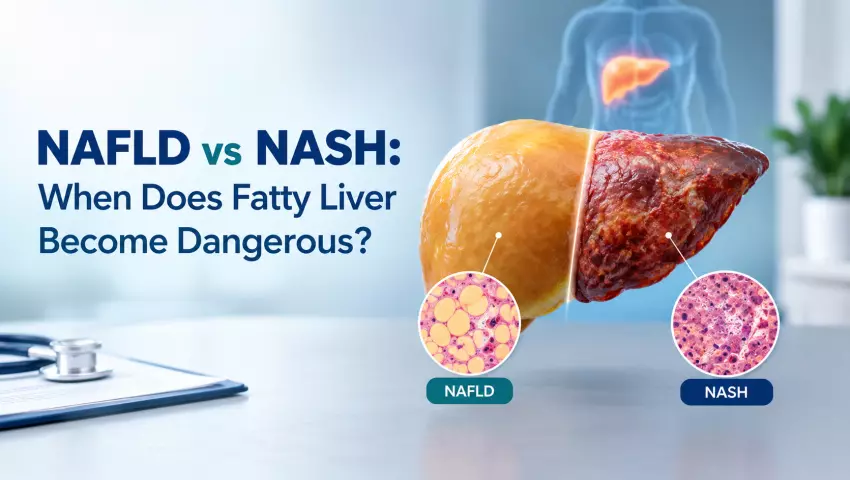
- NAFLD means fat is present in the liver, but there is no inflammation or cell damage yet.
- NASH means fat is present, along with inflammation and active liver cell injury.
Think of NAFLD vs NASH like two points on the same road. NAFLD is the early, quieter stage, where the liver is simply storing extra fat. NASH is the active, damaging stage, where that fat has started harming the liver tissue. Not everyone with NAFLD goes on to develop NASH. But almost everyone who has NASH started their journey with simple fatty liver first.
When Does NAFLD Become NASH?
NAFLD to NASH progression usually happens silently, over several years. There is no single fixed timeline for this. Every person’s body reacts differently. Some people stay in the mild NAFLD stage for their entire life, without any major trouble. Others progress much faster, especially if they have poor diet habits, obesity, or uncontrolled diabetes. This is exactly why regular liver check-ups matter so much. They help catch this NAFLD progression early, well before any noticeable symptoms appear.
What Causes NAFLD to Progress to NASH?
Several fatty liver risk factors can speed up fatty liver progression. The most common ones include:
- Obesity, especially fat around the belly area
- Type 2 diabetes or insulin resistance
- High cholesterol and high triglyceride levels
- A sedentary lifestyle with very little physical activity
- Poor diet, high in sugar, oil, and fried food
- Certain genetic factors that run in families
When these factors combine, they trigger fatty liver inflammation. This pushes the liver from simple fat storage into a stage of active injury, which is essentially NASH.
What Are the Early Signs of NASH?
NASH symptoms are often mild and very easy to miss. Some patients notice:
- Constant tiredness or fatigue, even after rest
- Mild, dull pain in the upper right side of the abdomen
- Unexplained weight loss
- General weakness or low energy through the day
Many patients feel completely normal until the liver damage has already become significant. This is exactly why symptoms alone cannot be trusted. Proper testing is far more reliable than waiting for the body to show signs.
Who Is at Higher Risk of Developing NASH?
You may be at higher risk if you have any of the following:
- Diabetes or prediabetes
- Obesity, or a larger than normal waist size
- High blood pressure
- High cholesterol levels
- A family history of liver disease
- PCOS, in the case of women
If you fall into one or more of these categories, regular screening with a qualified Hepatologist in Pune is strongly advised, even if you feel completely healthy right now.
How Is NASH Diagnosed?
Diagnosis usually involves a combination of simple tests, not one single test alone. These may include:
- Blood tests to check liver enzyme levels
- FIB-4 score, a simple calculation using your age, liver enzymes, and platelet count, to estimate the risk of liver fibrosis
- Ultrasound of the abdomen, to check for fat in the liver
- FibroScan, for a more detailed liver assessment
- Liver biopsy, only in select, more complicated cases
The FIB-4 score is often the very first, non-invasive step doctors use. Based on this score, they decide whether further, more detailed testing is required.
Can FibroScan Detect NASH and Liver Damage?
Yes, it can. FibroScan for fatty liver is a completely painless and quick test. It takes only a few minutes. This test measures liver stiffness, which gives a good idea about scarring or fibrosis inside the liver. It also estimates the exact amount of fat present in the liver tissue. Importantly, FibroScan does not require any injections, needles, or hospital admission. It is done right in the clinic. Dr. Kale frequently uses this tool to track fatty liver and fibrosis progress in his patients over time, allowing him to adjust treatment as needed.
Can NASH Lead to Liver Fibrosis or Cirrhosis?
Yes, unfortunately, if left untreated. NASH can slowly cause liver fibrosis, a condition where healthy liver tissue is gradually replaced by scar tissue. Over several years, this fibrosis may progress further into fatty liver and cirrhosis, which is a severe and often irreversible condition. In rare but serious cases, long-standing cirrhosis can even increase the risk of liver cancer. This is exactly why taking early action, at the NAFLD or early NASH stage, matters so much for long-term liver health.
Can NAFLD and NASH Be Reversed?
Here is some genuinely encouraging news: yes, in many cases, both conditions can be reversed or improved. Can fatty liver be reversed? At the NAFLD stage, consistent lifestyle changes alone can often clear the fat from the liver completely, within a matter of months. Even early NASH can improve significantly with the right combination of treatment, gradual weight loss, and close medical supervision. Advanced fibrosis, on the other hand, is much harder to reverse fully. This makes early diagnosis and timely treatment extremely valuable for every patient.
How Can You Prevent NAFLD From Progressing to NASH?
Simple, consistent daily steps help most patients. Some practical tips include:
- Losing 7–10% of body weight gradually, not suddenly
- Reducing sugar and refined carbohydrate intake
- Exercising at least 150 minutes every week
- Keeping diabetes and cholesterol levels under control
- Avoiding alcohol completely
- Going for regular liver check-ups, even without symptoms
Small daily habits, followed consistently over months, protect your liver far better than any crash diet or extreme measure.
When Should You See a Liver Specialist?
You should consult a doctor promptly if you notice:
- Persistent fatigue or ongoing abdominal discomfort
- Abnormal liver enzyme levels on routine blood tests
- Diabetes, obesity, or high cholesterol
- A family history of liver disease
- Fat detected on any ultrasound scan, even if you feel fine
Don’t wait for symptoms to get worse before acting. Early consultation with an experienced Liver Specialist in Pune can prevent years of silent, unnoticed liver damage.
Why Consult Dr. Vikrant Kale for Fatty Liver Treatment?
Dr. Vikrant Kale is a highly experienced gastroenterologist, hepatologist, and interventional endoscopist, with over 18 years of clinical experience. He has successfully treated more than 10,000 happy patients over the years. His expertise includes performing over 8000 gastroscopies, 5000 colonoscopies, and 3000 ERCPs. Dr. Kale holds an MRCPI qualification from the Royal College of Physicians of Ireland (2009), along with prestigious Oxford University fellowships in GI Endoscopy and Inflammatory Bowel Disease, both completed in 2018. At Kaizen Gastro Care, located in Wakad, Pune, Dr. Kale offers accurate diagnosis using advanced tools like FibroScan, thorough liver assessment, and truly personalised treatment plans for every patient dealing with NAFLD and NASH.
If you are searching for a trusted, experienced Hepatologist in Pune, Dr. Vikrant Kale’s clinic offers expert, compassionate, and patient-friendly liver care, right from the first consultation.
FAQs About NAFLD and NASH:
There is no fixed timeline for this change. It depends on individual risk factors like diabetes, obesity, and daily diet habits. For some people, it stays mild for many years. For others, it can progress within a shorter time, especially without lifestyle changes.
Yes, fatty liver can turn into NASH if the fat buildup starts causing inflammation inside the liver. Once inflammation begins, liver cells start getting damaged slowly. This is why doctors recommend regular monitoring, even when a patient feels completely fine.
NAFLD simply means fat is stored in the liver, without any inflammation or damage. NASH is a more advanced stage, where this fat has already started causing inflammation and injury to liver cells. In short, NAFLD is passive, while NASH is actively harmful.
Early NASH symptoms are often mild and easy to overlook. Common signs include constant fatigue, mild discomfort in the upper right abdomen, and general weakness. However, many patients feel no symptoms at all, which makes regular check-ups extremely important.
Worsening fatty liver usually shows up through blood test results rather than obvious symptoms. Rising liver enzyme levels, an increasing FIB-4 score, or higher liver stiffness on FibroScan are all warning signs. Your doctor can track these numbers over time to judge progress.
Yes, FibroScan is a reliable, painless test that measures both liver stiffness and fat content. Higher stiffness usually points towards fibrosis or scarring in the liver. Combined with blood tests, it helps doctors get a clearer picture and support an accurate NASH diagnosis.
NAFLD is often fully reversible, especially with consistent weight loss, better diet, and regular exercise. Early-stage NASH can also improve significantly with proper medical treatment and lifestyle changes. However, advanced fibrosis is much harder to reverse, so early action always gives better results.
Yes, if NASH is left untreated for many years, it can slowly progress to fibrosis and then cirrhosis. Cirrhosis is a serious, often irreversible condition where liver function gets badly affected. In rare, long-standing cases, this can even raise the risk of liver cancer.
