

- August 10, 2026
- Dr. Vikrant Kale
- 0 Comments
- Latest Blogs
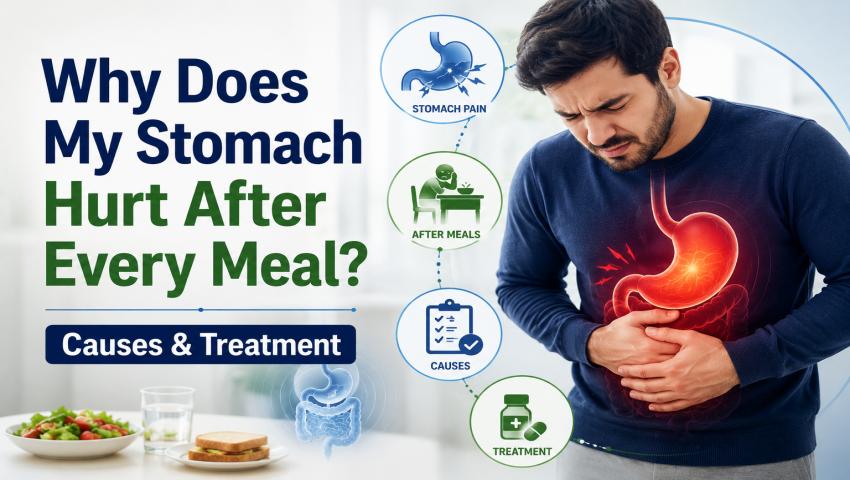
Why Does My Stomach Hurt After Every Meal? Causes & Treatment
Does your stomach pain after every meal? If yes, you are not alone. Many people in India face this problem daily. Sometimes the pain is mild and goes away by itself. Sometimes it is sharp and makes you worried. Stomach pain after eating can happen for simple reasons, like eating too much or eating too fast. But sometimes it can also be a sign of a bigger health problem that needs proper treatment. In this blog, Dr. Vikrant Kale, a well-known Stomach Specialist in Pune, explains why your stomach hurts after meals, what it means, and how it can be treated. He also tells you when to see a doctor urgently, and how to stop this pain from coming back.
What Does It Mean If Your Stomach Hurts After Every Meal?
Your stomach and intestines work hard every time you eat. Food travels from the mouth to the stomach. There, acid and enzymes break it down. Then it moves into the intestines for further digestion and absorption. This whole process needs many organs to work together smoothly. These organs include the stomach, small intestine, large intestine, liver, gallbladder, and pancreas.
If pain in the stomach after every meal happens, it means something is not working properly in this digestion process. It could be a small issue, like the stomach making too much acid. Or it could be a bigger issue, like a stone in the gallbladder or inflammation in the pancreas. The pain may come right after eating, or it may start 30 minutes to a few hours later. The timing and location of the pain give the doctor useful clues.
This pain should not be ignored, especially if it keeps coming back after every meal. A one-time pain due to spicy food is normal. But repeated pain means your body is trying to tell you something.
Common Symptoms That Can Happen Along With Stomach Pain:
Stomach pain rarely comes alone. Along with abdominal pain after meals, you may also notice:
- Bloating and stomach pain after eating – your stomach feels tight, full, and swollen
- Gas and burping – frequent gas formation and burping after food
- Nausea or vomiting – feeling like throwing up, especially after heavy meals
- Burning stomach pain after eating – a burning feeling in the upper stomach or chest
- Loose motions or constipation – changes in your bowel habits
- Loss of appetite – not feeling like eating, even your favourite food
- Heartburn – a burning sensation that rises from the stomach towards the throat
- Tiredness or weakness – feeling low on energy after eating
These indigestion symptoms often occur together. Writing them down and noting when they happen (right after eating, or after specific foods) helps your doctor understand the exact problem faster.
Why Does My Stomach Hurt After Eating?
There are many possible causes of stomach pain after eating. Let us understand each one in detail.
- Indigestion (Dyspepsia): Indigestion is one of the most common reasons for stomach pain. It happens when your stomach cannot digest food properly. This often happens after eating heavy, spicy, or oily food, or after eating too much in one sitting. You may feel a heavy, full feeling in the upper stomach, along with stomach cramps after eating, gas, and burping. Indigestion is usually not serious, but if it happens very often, it should be checked.
- Acid Reflux (GERD): GERD stands for Gastroesophageal Reflux Disease. In this condition, acid from the stomach flows back up into the food pipe (oesophagus). This causes burning stomach pain after eating, along with a sour taste in the mouth and chest discomfort. GERD often gets worse when you lie down soon after eating, or when you eat spicy and fried food. If left untreated for a long time, it can damage the lining of the food pipe.
- Gastritis (Stomach Inflammation): Gastritis means the inner lining of the stomach becomes inflamed and irritated. This can happen due to spicy food, alcohol, certain painkillers, infection, or too much stress. Gastritis causes upper stomach pain after eating, along with nausea and a burning feeling. In some cases, it can also cause loss of appetite and vomiting.
- Stomach Ulcers: Ulcers are open sores that form on the inner lining of the stomach or the first part of the small intestine (duodenum). They are often caused by a bacteria called H. pylori, or by long-term use of painkillers. Stomach ulcers cause a sharp, burning pain. Interestingly, eating can sometimes make ulcer pain better and sometimes worse, depending on where the ulcer is located. If ulcers are not treated, they can bleed, which is a serious problem.
- Food Intolerance (Lactose or Gluten): Some people cannot digest certain foods properly. Lactose intolerance means the body cannot digest milk sugar (lactose) found in dairy products. Gluten intolerance means the body reacts badly to gluten, a protein found in wheat and related grains. Both conditions cause stomach cramps, bloating, gas, and loose motions soon after eating the trigger food. Many people do not realise they have food intolerance until they notice a pattern between certain foods and their symptoms.
- Food Allergy: A food allergy is different from food intolerance. It happens when your immune system reacts strongly to a certain food, treating it like a threat. This can cause sudden stomach pain, along with other symptoms like skin rashes, itching, swelling of lips or face, or difficulty in breathing in severe cases. Common food allergies include nuts, seafood, eggs, and certain dairy products. Food allergies need urgent medical attention if breathing is affected.
- Irritable Bowel Syndrome (IBS): IBS is a long-term condition that affects the large intestine. The exact cause is not fully known, but stress, certain foods, and gut sensitivity play a role. IBS causes recurring pain in stomach after every meal, along with bloating, gas, and irregular bowel habits (sometimes loose motions, sometimes constipation). IBS is a manageable condition, but it needs proper diagnosis and a long-term plan involving diet and lifestyle changes.
- Gallstones: The gallbladder stores bile, a fluid that helps digest fat. Sometimes, small hard stones form inside the gallbladder. These are called gallstones. Gallstones usually do not cause problems until they block the flow of bile. When this happens, you feel sudden, severe pain in the upper right side of the stomach, often after eating fatty or oily meals. This pain can also spread to the back or right shoulder. Gallstones may need surgery in some cases.
- Pancreatitis: The pancreas is a gland that makes digestive enzymes and insulin. When it becomes inflamed, the condition is called pancreatitis. It causes severe pain in the upper abdomen, which often spreads to the back. This pain usually gets worse after eating, especially fatty food. Pancreatitis can be caused by gallstones, heavy alcohol use, or high fat levels in the blood. It is a serious condition and needs prompt medical care.
- Constipation: When bowel movements become difficult or infrequent, stool builds up in the intestine. This puts pressure on the stomach and nearby organs, causing pain and bloating, especially after eating. Constipation is common due to low fibre intake, less water, and lack of physical activity.
- Overeating or Eating Too Fast: This is one of the simplest and most common causes of stomach pain after eating. When you eat too much food in one sitting, or eat very fast without chewing properly, your stomach gets overloaded. It cannot digest the food efficiently, leading to pain, heaviness, and bloating. Eating slowly and in smaller portions can prevent this.
- Food Poisoning: Food poisoning happens when you eat food contaminated with bacteria, viruses, or toxins. This causes sudden stomach cramps, vomiting, loose motions, and sometimes fever, usually within a few hours of eating the contaminated food. Street food, stale food, and improperly stored food are common causes. Most cases improve with rest and fluids, but severe cases need medical treatment.
Which Foods Can Trigger Stomach Pain After Meals?
Certain foods are more likely to upset your stomach and trigger pain:
- Spicy and oily food
- Fried snacks like samosas, pakoras, and vada pav
- Excess tea or coffee
- Carbonated and aerated drinks
- Dairy products (for people with lactose intolerance)
- Wheat products like roti and bread (for people with gluten sensitivity)
- Red meat and heavy non-vegetarian meals
- Stale, unhygienic, or street food
- Foods high in artificial sugar or preservatives
Keeping a simple food diary and noting down which foods upset your stomach can help you and your doctor identify the exact trigger much faster.
How Is the Cause of Stomach Pain Diagnosed?
Finding the exact cause of stomach pain needs a proper medical evaluation. Dr. Vikrant Kale follows a step-by-step approach:
- Detailed history – he asks about your eating habits, timing of pain, other symptoms, and lifestyle
- Physical examination – checking the abdomen for tenderness or swelling
- Blood tests – to check for infection, inflammation, or organ function
- Stool tests – to check for infection or blood in the stool
- Ultrasound of the abdomen – to check the liver, gallbladder, and pancreas
- Endoscopy – a thin camera is passed through the mouth to check the food pipe, stomach, and first part of the intestine
- Colonoscopy – a thin camera is passed through the rectum to check the large intestine
- pylori test – to check for the bacteria that causes ulcers and gastritis
With over 8000 gastroscopies, 5000 colonoscopies, and 3000 ERCPs performed till date, Dr. Kale has the deep experience needed to diagnose the exact cause accurately and quickly.
Treatment for Stomach Pain After Eating:
Treatment always depends on the exact cause found after diagnosis. There is no single medicine that works for everyone. As a trusted name for Acidity Treatment in Pune, Dr. Kale offers a complete range of treatment options.
- Medicines for acid and stomach lining: For acid reflux, gastritis, and ulcers, medicines like antacids and acid-blockers lower the acid level and let the stomach lining heal. Most patients feel relief within a few days.
- Antibiotics for H. pylori infection: Many ulcers are caused by H. pylori bacteria. A short antibiotic course, along with acid-reducing medicines, clears the infection and helps healing.
- Diet and lifestyle changes: Medicines alone are not enough. Dr. Kale guides each patient on foods to avoid and simple habits to follow, based on their exact condition.
- Enzyme supplements: If the pancreas cannot make enough digestive enzymes, supplements are given with meals. This improves digestion and reduces bloating.
- Advanced endoscopic treatment: For ulcers, bleeding, or blockages, endoscopy allows the doctor to see and treat the problem directly, often avoiding major surgery.
- Management of gallstones and pancreatitis: Gallstones may need removal, and blockages in the bile duct or pancreas are treated with ERCP, a procedure Dr. Kale has performed 3000+ times.
- Long-term care plans: Chronic conditions like IBS and GERD need an ongoing plan of medicines, diet control, and regular follow-up for lasting relief.
The goal is not just to stop the pain for a day, but to treat the root cause so it does not return.
When Should You See a Doctor Immediately?
Some symptoms need urgent medical attention. Visit a Stomach Specialist right away if you notice:
- Severe or rapidly worsening pain
- Blood in vomit or stool (may look black or dark red)
- Unexplained weight loss
- High fever along with stomach pain
- Yellowing of the eyes or skin (jaundice)
- Pain that does not improve with home care or over-the-counter medicine
- Difficulty in swallowing
- Persistent vomiting
Delaying treatment in these cases can lead to complications. Early diagnosis always leads to faster and easier recovery.
Tips to Prevent Stomach Pain After Eating:
Small changes in your daily routine can make a big difference:
- Eat smaller meals, more frequently, instead of two or three large meals
- Chew your food slowly and properly before swallowing
- Avoid spicy, oily, and fried food as much as possible
- Limit tea, coffee, and carbonated drinks
- Do not lie down immediately after eating; wait at least 30 minutes
- Stay well hydrated throughout the day
- Maintain a healthy body weight
- Manage stress through light exercise, walking, or yoga
- Avoid eating late at night
- Get enough sleep every day
Following these simple habits can reduce the chances of stomach pain returning again and again.
Frequently Asked Questions (FAQ's):
It can be simple indigestion, or it can be a sign of a bigger issue like ulcers, gallstones, or pancreatitis. Pain that keeps repeating after every meal needs a proper doctor’s check-up.
You should consult a gastroenterologist, a doctor who specialises in the digestive system, including the stomach, intestines, liver, gallbladder, and pancreas.
Yes. Stress affects the nerves that control digestion. It can slow down or speed up the digestive process, leading to bloating, cramps, and pain.
Mild indigestion often settles within a few hours on its own. If the pain continues for several days or keeps coming back, it is best to see a doctor.
Yes, children can also experience this. In children, it is often due to overeating, food intolerance, or infection. Persistent pain in children should always be checked by a doctor.
Drinking water in small amounts can help with mild indigestion. But drinking too much water immediately after a heavy meal can also cause bloating. It is better to sip water slowly through the day.
In some cases, especially in older adults, chest and upper stomach discomfort after eating can be related to the heart. If pain is accompanied by sweating, breathlessness, or pain spreading to the arm or jaw, seek emergency medical help immediately.
Conclusion:
Stomach pain after every meal is a common problem, but it should never be ignored. It can be as simple as overeating, or as serious as gallstones or pancreatitis. Understanding the exact cause is the first step towards lasting relief. With 17+ years of experience and 10,000+ happy patients, Dr. Vikrant Kale at Dr. Kale’s Gastro Clinic offers accurate diagnosis and effective, personalised treatment for all types of stomach and digestive problems. His 98% success ratio reflects the trust patients place in his care.
If you are struggling with stomach pain after meals, do not wait for it to get worse. Book a consultation with Dr. Vikrant Kale, the trusted Gastroenterologist in Pune, today, and take the first step towards a healthier digestive system.
